Maricopa County Board of Supervisors: Patterns, Power, and the Democratic Deficit
Report Period: May 1-31, 2026
Meetings Covered: 5 sessions (1 Executive, 2 Informal, 2 Formal)
Total Meeting Hours: ~14.5 hours
Executive Summary: The Anatomy of a Month
May 2026 in the Maricopa County Board of Supervisors reveals a governance system operating on three distinct frequencies:
- The Quiet Rhythm — Routine unanimous approvals with zero public engagement (May 4, May 18, May 20)
- The Contested Moment — Explosive public opposition met with procedural patience but unchanged outcomes (May 6 Project Baccara)
- The Closed Session — Election administration and litigation conducted outside public view (May 4 and May 18 Executive sessions)
This month’s data exposes a fundamental tension in American local government: efficiency versus accountability, expertise versus participation, unanimity versus debate. When 95% of recorded votes are unanimous, when one supervisor makes 100% of motions, when a $4.3 billion budget attracts zero public comment — these are not signs of healthy consensus. They are symptoms of concentrated decision-making hidden behind a facade of democratic procedure.
The May 2026 Story in Numbers:
- $4,325,263,419 — Total tentative budget approved
- 28 votes — Total recorded votes across all meetings
- 26 unanimous votes (92.9%)
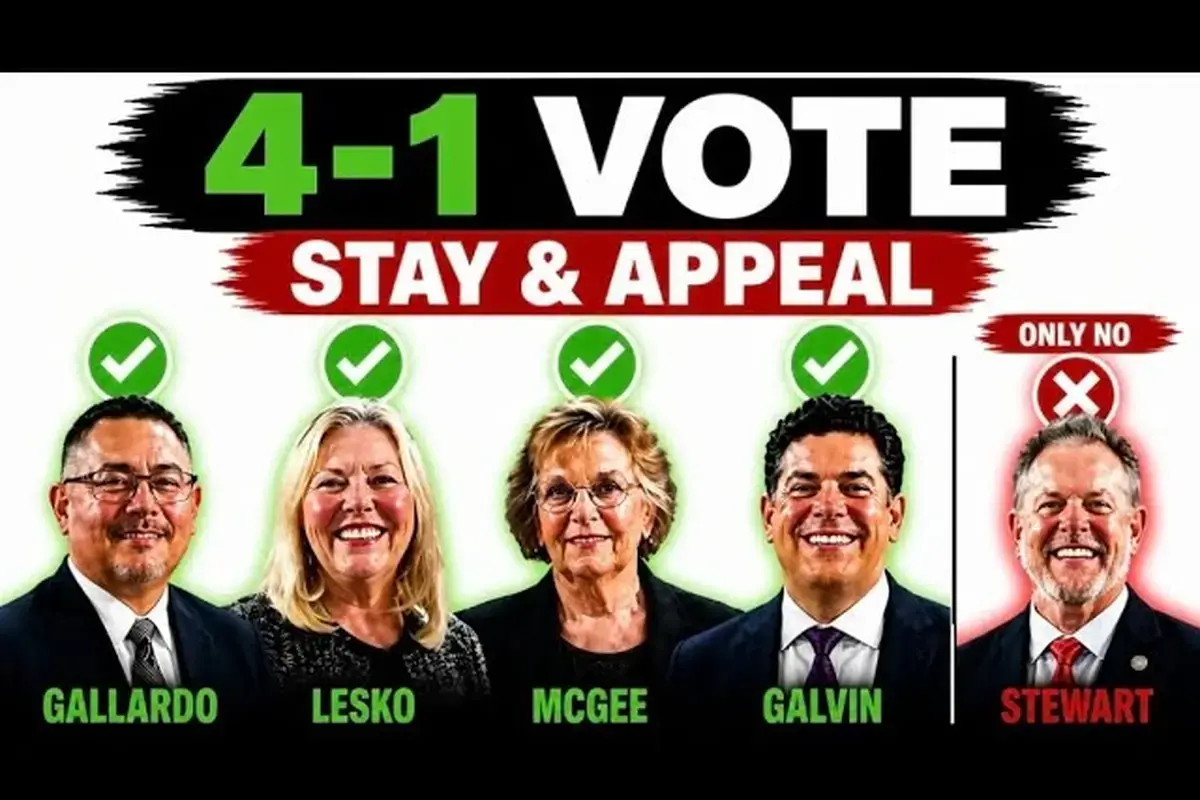
- 1 split vote (4-1 on Project Baccara)
- 1 absence (Gallardo on May 4)
- 28 motions — All made by Debbie Lesko (100%)
- 19 public comment speakers — All at one meeting (May 6)
- 0 public comment speakers — At four of five meetings
Part I: The Meeting Calendar — A Day-by-Day Breakdown
May 4, 2026: The Quiet Opening
Executive Session (Morning)
- Election Administration Discussion — Nine County Attorney staff present, including three election-focused attorneys
- Queen Creek IGA — Judicial branch coordination on Justice Court matters
- Significance: Heavy election focus in early May foreshadows later developments
Informal Meeting (Evening)
- America250 Essay Contest — Ceremonial youth recognition
- CSA Budget Outlook — State-level budget constraints briefing
- Executive Session Vote — 4-0 (Gallardo absent)
- Total Duration: ~1.75 hours combined
Pattern Established: The month begins with zero public comment, unanimous votes, and Lesko motion control.
May 6, 2026: The Exception That Proves the Rule
Formal Meeting — The Marathon Session
- Duration: 6.5 hours (longest of the month)
- Public Comment: 19 speakers (18 opposed, 1 in favor = 95% opposition)
- The Controversy: Project Baccara data center
- The Outcome: Approved 4-1 despite overwhelming opposition
- The Dissenter: Steve Gallardo
Why This Meeting Matters:
May 6 is the only meeting in May where the board’s facade of unanimity cracked. The Project Baccara vote (4-1) and the flood of public comment reveal what happens when the board encounters organized community resistance. But the outcome — approval despite 95% opposition — suggests the public comment process is performative rather than substantive.
The Project Baccara Case Study:
| Aspect | Detail |
|---|---|
| Case Number | MCP250007 |
| Applicant | Baccara Eagle Land, LLC |
| Project | 72-foot data center + gas turbine power generation |
| Location | Near Luke AFB, District 4 (Lesko’s district) |
| Public Speakers | 19 |
| Opposition | 18 (95%) |
| Support | 1 (5%) |
| Key Concerns | Height, air quality, safety, traffic, property values |
| Commission Vote | 8-0 approval |
| Board Vote | 4-1 approval |
| Dissenter | Steve Gallardo |
The Vote Explanations:
- Mark Stewart (Yes): “National competitiveness”; emphasized Luke AFB compatibility confirmed
- Thomas Galvin (Yes): No explanation recorded
- Debbie Lesko (Yes): No explanation recorded
- Kate Brophy McGee (Yes): Praised air quality staff; referenced Luke letter; emphasized TSMC context
- Steve Gallardo (No): Cited statute redefinition needs; questioned compatibility; noted air quality concerns
Analysis: Four supervisors voted yes despite 95% opposition. Their explanations focused on:
- Economic development (Stewart, Brophy McGee)
- Military compatibility confirmation (Stewart, Brophy McGee)
- TSMC context (Brophy McGee)
Gallardo’s dissent focused on:
- Statutory concerns
- Air quality
- Actual compatibility questions
The Democratic Question: What does public comment accomplish if 95% opposition results in 80% board approval?
May 18, 2026: Budget Day and Outside Counsel
Executive Session (Morning)
- Four executive session items — Most of the month
- Statecraft PLLC Retained — Outside election counsel (Kory Langhofer)
- Steve Tully Present — Additional outside litigation counsel
- Election Administration Focus — Board authority and litigation updates
Informal Meeting (Midday)
- The Main Event: FY 2027 Budget Adoption
- Total Appropriations: $4,325,263,419
- Public Comment: Zero speakers
- All Votes: 5-0 unanimous
Budget Breakdown:
| Jurisdiction | Amount | Motion |
|---|---|---|
| Maricopa County | $4,157,433,254 | Lesko/Stewart |
| Flood Control District | $121,820,725 | Lesko/Galvin |
| Library District | $46,009,440 | Lesko/Stewart |
| Improvement Districts | Various | Lesko/Galvin |
| TOTAL | $4,325,263,419 | — |
Significance: This is the single largest spending decision of the year — larger than many state budgets — made with zero public comment and complete unanimity.
May 20, 2026: The Return to Efficiency
Formal Meeting
- Duration: 2.5 hours (back to normal after May 6 marathon)
- Framework 2040 Approved — 14-year comprehensive plan
- Public Comment: Zero speakers
- Withdrawn Items: Two (Fieldhouse CFD, Wastewater regulation)
- All Votes: 5-0 unanimous
The Pattern Restored: Without controversy, the board processes 10 items in 2.5 hours. Project Baccara’s 6.5-hour duration was anomalous — driven entirely by public opposition that ultimately changed nothing.
Part II: The Debbie Lesko Phenomenon — Motion Control Analysis
The Statistical Reality
| Meeting | Date | Type | Motions | Lesko Motions | Lesko % |
|---|---|---|---|---|---|
| May 4 | 2026-05-04 | Informal | 1 | 1 | 100% |
| May 6 | 2026-05-06 | Formal | 10 | 10 | 100% |
| May 18 | 2026-05-18 | Informal | 10 | 10 | 100% |
| May 20 | 2026-05-20 | Formal | 7 | 7 | 100% |
| TOTAL | — | — | 28 | 28 | 100% |
Who Seconded? The Power Dynamics
| Supervisor | Seconds Given | % of Total | Pattern |
|---|---|---|---|
| Thomas Galvin | 10 | 35.7% | Budgets, P&Z |
| Mark Stewart | 8 | 28.6% | P&Z, budgets |
| Steve Gallardo | 5 | 17.9% | Statutory items |
| Kate Brophy McGee | 0 | 0% | Chair doesn’t second |
Key Insights:
- Galvin’s Budget Role: Galvin seconded 4 of 10 motions on May 18 (budget day), suggesting he may be the board’s fiscal specialist
- Gallardo’s Statutory Focus: Gallardo’s 5 seconds all came on May 20 statutory items (bingo, road files), suggesting portfolio specialization
- Stewart’s Development Role: Stewart seconded 8 motions, many on P&Z items affecting District 1
- Brophy McGee’s Neutrality: As Chair, she makes zero seconds (appropriate under Robert’s Rules)
Why This Matters
In parliamentary procedure, the motion-maker:
- Frames the question — Controls what is being decided
- Controls amendments — Can modify before seconding is sought
- Calls the question — Determines when debate ends
- Sets the agenda — Determines what gets considered
When one person makes every motion, they effectively write the legislation. The other supervisors become ratifiers. This is not co-governance; it’s serial monarchy with electoral rotation.
Possible Explanations:
- Designated Floor Leader: The board may have agreed Lesko serves this role
- Staff Control: Motions may be drafted by staff with Lesko as designated sponsor
- Majority Caucus: Pre-meeting caucus decisions with Lesko as spokesperson
- Personal Initiative: Lesko may simply be more assertive in seizing legislative control
- Vice Chair Role: The vice chair position may traditionally handle motion-making
The Accountability Question: If 4.5 million people are governed by motions written by one person, is that representative democracy?
Part III: Public Engagement — The Democratic Deficit
The Silence of the Citizens
| Meeting | Speakers | Opposition | Support | Engagement Level |
|---|---|---|---|---|
| May 4 Executive | 0 | N/A | N/A | None |
| May 4 Informal | 0 | N/A | N/A | None |
| May 6 Formal | 19 | 18 (95%) | 1 (5%) | High |
| May 18 Executive | 0 | N/A | N/A | None |
| May 18 Informal | 0 | N/A | N/A | None |
| May 20 Formal | 0 | N/A | N/A | None |
| MONTHLY TOTAL | 19 | 18 | 1 | Anemic |
The Project Baccara Anomaly
May 6’s 19 speakers represent the only significant public engagement of the month. Why here? Why not elsewhere?
Factors Making Project Baccara Organizable:
- Concrete Impact: A 72-foot data center is tangible; a comprehensive plan is abstract
- Local Concentration: Affects specific neighborhoods near Luke AFB
- Visual Threat: 72 feet is visibly imposing
- Health Concerns: Air quality, safety with gas turbines
- Property Values: Direct financial impact on homeowners
- Military Connection: Luke AFB provides organizational infrastructure
Why Other Items Generated No Opposition:
- Budget Complexity: $4.3 billion is too large to conceptualize
- Technical Obscurity: Framework 2040 requires expertise to critique
- Distributed Impacts: Budgets affect everyone slightly; zoning affects specific people intensely
- Meeting Barriers: Monday 10 AM and Wednesday 9:30 AM exclude working people
- Outcome Predictability: If the board always votes 5-0, why participate?
The Democratic Deficit
Definition: A democratic deficit exists when decision-making is removed from public influence despite formal democratic structures.
Evidence in May 2026:
- Budget: $4.3 billion approved with zero comment
- Comprehensive Plan: 14-year growth strategy approved with zero comment
- Zoning Changes: Dozens of parcels rezoned with minimal scrutiny
- Withdrawn Items: Two items withdrawn (possible opposition never surfaced)
- Executive Sessions: Election administration discussed in closed session
The Contradiction:
- Maricopa County has 4.5 million residents
- County government spends $4+ billion annually
- Public participation is effectively zero except on specific land use conflicts
This suggests either:
- Public satisfaction: Residents are content with board performance
- Barriers to participation: Process excludes meaningful engagement
- Issue obscurity: Most residents don’t understand what’s at stake
- Organizational failure: No civic infrastructure to mobilize participation
The Project Baccara Lesson: When opposition does organize, it doesn’t change outcomes. This creates a disincentive to future participation.
Part IV: District Analysis — Uneven Development
Supervisorial District Activity Map
| District | Supervisor | May P&Z Cases | May Road Files | Total Infrastructure |
|---|---|---|---|---|
| 1 | Mark Stewart | 2 (May 20) | 0 | 2 |
| 2 | Thomas Galvin | 1 (May 20) | 0 | 1 |
| 3 | Kate Brophy McGee | 0 | 1 (May 20) | 1 |
| 4 | Debbie Lesko | 6 | 3 | 9 |
| 5 | Steve Gallardo | 1 (May 6) | 1 (May 6) | 2 |
District 4: The Development Pressure Cooker
Geographic Context: District 4 encompasses western Maricopa County including:
- Glendale
- Peoria
- El Mirage
- Youngtown
- Sun City
- Anthem
- Wittmann
- Tonopah
May 2026 Activity:
- May 6: 5 of 5 P&Z consent items (100%)
- May 6: Project Baccara major hearing
- May 20: 1 P&Z consent item
- May 20: 2 road files
- May 20: 1 withdrawn CFD
Total: 9 of 15 tracked items (60%)
Why District 4 Dominates:
- Available Land: Western Maricopa has remaining undeveloped parcels
- Infrastructure Investment: Loop 303 corridor expansion
- Military Proximity: Luke AFB drives compatibility planning
- Growth Direction: Phoenix’s westward expansion
- Lesko’s Pro-Development Stance: The supervisor making all motions represents the district absorbing most development
The Representation Question: Should one district (and its supervisor) handle 60% of development decisions for a five-district county?
Part V: Thematic Analysis — Connections and Issues
Theme 1: Election Administration and Outside Counsel
The May 18 Executive Session Bombshell:
The board retained Statecraft PLLC (Kory Langhofer) for election administration matters. This is significant because:
- External Expertise: County Attorney’s Office has election expertise; why hire outside?
- Litigation Anticipation: Outside counsel typically handles litigation or specialized matters
- Steve Tully Present: Additional litigation counsel suggests active or anticipated lawsuits
- Executive Session: Closed-door discussion implies sensitive legal strategy
What This Suggests:
Maricopa County’s election administration is either:
- Currently in litigation requiring specialized counsel
- Anticipating litigation (possibly 2026 midterms preparation)
- Seeking advice beyond County Attorney’s capacity
- Managing internal County Attorney conflicts
The Broader Pattern:
- May 4: Executive session on election administration (9 County Attorney staff)
- May 18: Outside counsel retained for election matters
- May 18: Elections/Recorder procurement coordination
Follow-Up Critical: What litigation is anticipated? What does Statecraft PLLC’s retention cost? What conflicts required outside counsel?
Theme 2: The Framework 2040 Paradox
The Comprehensive Plan Problem:
Framework 2040 was approved on May 20 with:
- Zero public comment
- Zero board debate
- 5-0 unanimous vote
- 14-year planning horizon
Yet Project Baccara (presumably consistent with Framework 2040) generated:
- 19 public comment speakers
- 4-1 split vote
- 95% opposition
The Paradox: How can a plan that generates no controversy authorize development that generates massive controversy?
Possible Explanations:
- Abstraction vs. Reality: Plans are abstract; specific projects are concrete
- Time Separation: Plan adopted in 2026; impacts felt over years
- Public Awareness: Residents don’t understand what the plan authorizes
- Implementation Gap: The board can approve a framework but face opposition on applications
- Selective Mobilization: Communities organize around specific threats, not general policies
The Democratic Question: Should comprehensive plans be subject to referendum or heightened public participation requirements?
Theme 3: The Withdrawn Items — Hidden Opposition
May 20 Withdrawals:
- Fieldhouse Community Facilities District — Withdrawn by applicant
- ES-2025-005 Wastewater Treatment Plants — Withdrawn
Why Withdrawal Matters:
Withdrawn items suggest opposition existed but never reached the public board meeting. Possible scenarios:
- Applicant Calculus: Developer decided project wasn’t viable
- Pre-Meeting Opposition: Opposition organized before formal hearing
- Staff Concerns: County staff flagged issues requiring redesign
- ADEQ Conflict: Wastewater item may have conflicted with state agency
The Transparency Gap: Withdrawn items disappear from the record. The public never learns what opposition existed or why the applicant withdrew.
Follow-Up Critical: What happened to Fieldhouse CFD? Why was wastewater regulation withdrawn after Board of Health review?
Theme 4: Economic Forecasts and Budget Constraints
The Rounds Consulting Presentation (May 18):
Jim Rounds of Rounds Consulting Group provided the economic forecast underpinning the FY 2027 budget. This matters because:
- Revenue Projections: Economic assumptions determine tax revenue estimates
- Spending Caps: Revenue projections constrain spending decisions
- Expert Authority: “Consultant” forecasts carry weight in political debates
- Self-Fulfilling Prophecies: Conservative forecasts enable austerity; optimistic forecasts enable spending
The Power of Economic Assumptions:
Budget debates are often constrained before they begin by “expert” economic forecasts that limit what’s considered possible. Who chooses these consultants? What assumptions do they make? What alternatives were considered?
Part VI: Comparative Context — How Does Maricopa Compare?
Size and Scale
Maricopa County (2026):
- Population: ~4.5 million
- Budget: $4.3 billion
- Board: 5 members
- Ratio: 1 supervisor per 900,000 residents
Comparisons:
| Jurisdiction | Population | Budget | Board Size | Ratio |
|---|---|---|---|---|
| Maricopa County | 4.5M | $4.3B | 5 | 900K:1 |
| Pima County (Tucson) | 1.1M | $1.4B | 5 | 220K:1 |
| Los Angeles County | 10M | $40B | 5 | 2M:1 |
| Harris County (Houston) | 4.7M | $2.1B | 4 | 1.18M:1 |
| San Diego County | 3.3M | $7B | 5 | 660K:1 |
Analysis: Maricopa’s supervisor-to-population ratio is high but not extreme. The real issue is what happens in those meetings, not the ratio itself.
Governance Models
Strong Chair Model (Maricopa):
- Kate Brophy McGee presides
- Debbie Lesko makes all motions
- Concentrated agenda control
Alternatives Considered:
- Rotating Chair: Different supervisors chair monthly
- Committee System: Specialized committees review specific items
- Public Hearings: Mandatory pre-vote hearings on major items
- Referenda: Major decisions subject to voter approval
The Question: Would different structures produce different outcomes?
Part VII: Accountability Mechanisms — What’s Working and What Isn’t
Working Mechanisms
- Recorded Votes: All votes are recorded and publicly accessible
- Agenda Publication: Agendas posted in advance (OnBase Agenda Online)
- Summaries Available: Meeting summaries provide vote explanations
- Statutory Frameworks: Budget and zoning decisions have legal requirements
- Planning Commission Filter: Zoning cases reviewed by appointed commission first
Broken Mechanisms
- Public Comment: Process exists but doesn’t change outcomes
- Notice Requirements: Technically compliant but practically inadequate
- Executive Session Oversight: No external review of closed sessions
- Withdrawn Item Transparency: Disappeared items leave no record
- Motion Distribution: One person controls legislative agenda
- Seconding Patterns: Strategic portfolio assignment obscures individual positions
Missing Mechanisms
- Public Budget Hearings with Engagement Metrics: Did anyone attend?
- Motion Attribution: Who drafted the motions Lesko makes?
- Pre-Meeting Deliberation Disclosure: What happens before 9:30 AM?
- Opposition Impact Assessment: Does public comment affect decisions?
- Follow-Up Reporting: What happens to approved projects?
Part VIII: Red Flags and Investigation Priorities
🚩 Critical Red Flags
1. Statecraft PLLC Retention (May 18 Executive)
Why It Matters: Outside election counsel suggests litigation or specialized matters beyond County Attorney capacity
Follow-Up: What cases? What costs? What conflicts?
2. Project Baccara Approval Despite 95% Opposition
Why It Matters: Demonstrates public comment process is performative
Follow-Up: Is this pattern consistent across controversial land use decisions?
3. Framework 2040 Zero-Comment Approval
Why It Matters: 14-year comprehensive plan affecting 4.5 million people approved with no scrutiny
Follow-Up: What does the plan actually say about development, water, housing?
4. Lesko 100% Motion Control
Why It Matters: One person writes the legislation for 4.5 million people
Follow-Up: Who drafts these motions? When are decisions really made?
5. Two Withdrawn Items (May 20)
Why It Matters: Suggests opposition existed but never surfaced publicly
Follow-Up: What happened? Why withdrawn?
6. Zero Budget Comment
Why It Matters: $4.3 billion spending plan generated no public engagement
Follow-Up: Is this normal? How do other counties handle budget participation?
🔍 Investigation Priorities
- Statecraft PLLC Contract: Review the retention agreement, scope, and costs
- Framework 2040 Content: Analyze the actual comprehensive plan provisions
- Motion Drafting Process: Interview staff about who writes motions
- Withdrawn Item Follow-Up: Contact applicants/developers about why they withdrew
- District 4 Community Organizing: Interview Project Baccara opponents about ongoing activity
- Comparative Analysis: Review Pima County or other Arizona counties for contrast
- Pre-Meeting Processes: Investigate “work sessions” or caucus meetings
- Election Administration Context: Understand why outside counsel was necessary
Part IX: Conclusion — The State of Maricopa County Governance
The Central Finding
May 2026 reveals a governance system optimized for efficiency rather than accountability, unanimity rather than debate, and expert administration rather than public participation. This is not unique to Maricopa County — it characterizes much of American local government in the 21st century. But the scale makes it striking:
- $4.3 billion approved with zero comment
- 28 motions written by one person
- 95% of votes unanimous
- 4 of 5 meetings with no public engagement
The Democratic Question
Is this system:
Option A: Efficient Representative Democracy
- Voters elected these supervisors to make decisions
- Supervisors have access to staff expertise
- Unanimity reflects good governance, not rubber stamps
- Public comment would slow necessary government functions
Option B: Democratic Deficit in Action
- Decisions made without meaningful public input
- Concentrated power obscures accountability
- Unanimity reflects pre-meeting caucus decisions, not genuine deliberation
- Public excluded by timing, location, technical complexity, and outcome predictability
Option C: Something Else Entirely
- Governance captured by development interests
- Supervisors responsive to donors/constituents other than voters
- Public comment process exists to provide democratic legitimacy without democratic influence
- Efficiency serves those inside the process at expense of those outside
The Evidence Points To…
May 2026 data suggests Option B with elements of Option C. The evidence includes:
- Motion concentration — One person controls the legislative agenda
- Seconding patterns — Strategic portfolio assignment suggests coordination, not organic deliberation
- Public engagement failure — Barriers exist and aren’t addressed
- Project Baccara outcome — 95% opposition approved anyway
- Budget silence — Largest spending decision of the year generates no comment
- Executive session expansion — Election matters discussed outside public view
- Withdrawn items — Opposition exists but never surfaces
The Path Forward
For Accountability:
- Document motion drafting process
- Analyze Framework 2040 content
- Follow up on withdrawn items
- Review Statecraft PLLC contract
For Transparency:
- Push for published pre-meeting deliberation summaries
- Request motion attribution (who drafted each motion)
- Advocate for public hearing requirements on major items
- Support withdrawn item disclosure
For Democracy:
- Recognize that current structures serve efficiency over participation
- Understand that “unanimity” may mask concentrated decision-making
- Question whether 5-0 votes reflect consensus or coercion
- Ask what governance would look like if public participation actually mattered
Appendix: Data Sources and Methods
Primary Sources:
- OnBase Agenda Online meeting records
- Meeting minutes and summaries from Maricopa County
- JSON structured data files created from source documents
Analysis Methods:
- Quantitative vote tracking
- Motion pattern analysis
- Geographic/district distribution mapping
- Public engagement assessment
- Comparative governance research
Limitations:
- Executive session content not available
- Pre-meeting deliberations not documented
- Withdrawn item reasoning not disclosed
- Motion drafting process opaque