The Maricopa County Board of Supervisors convened on Wednesday, September 30, 2026, for a formal meeting that ran approximately three hours. All five supervisors were present: Kate Brophy McGee (D3, Chair), Debbie Lesko (D4, Vice Chair), Mark Stewart (D1), Thomas Galvin (D2), and Steve Gallardo (D5).
The meeting’s emotional center was a commemoration of Christy Jackman, a Rio Verde Foothills grassroots leader who died earlier in the summer after leading her community through its water crisis. Supervisor Galvin spent 13 minutes introducing State Representative Cody Reim and Jackman’s family, holding up a photo of her grandson Deacon and calling Jackman “the most impressive person I have met since I have come into this position.”
But beneath the ceremony, the meeting exposed three running fault lines: the open feud between Recorder Justin Heap and the board over election equipment, a domestic violence proclamation that turned into raw personal testimony, and a public comment session dominated by election anxiety with the board offering virtually no direct response.
Every vote was unanimous. Every motion was made by Debbie Lesko.
The Heap Presentation: Transparency Theater with a Side of Blame
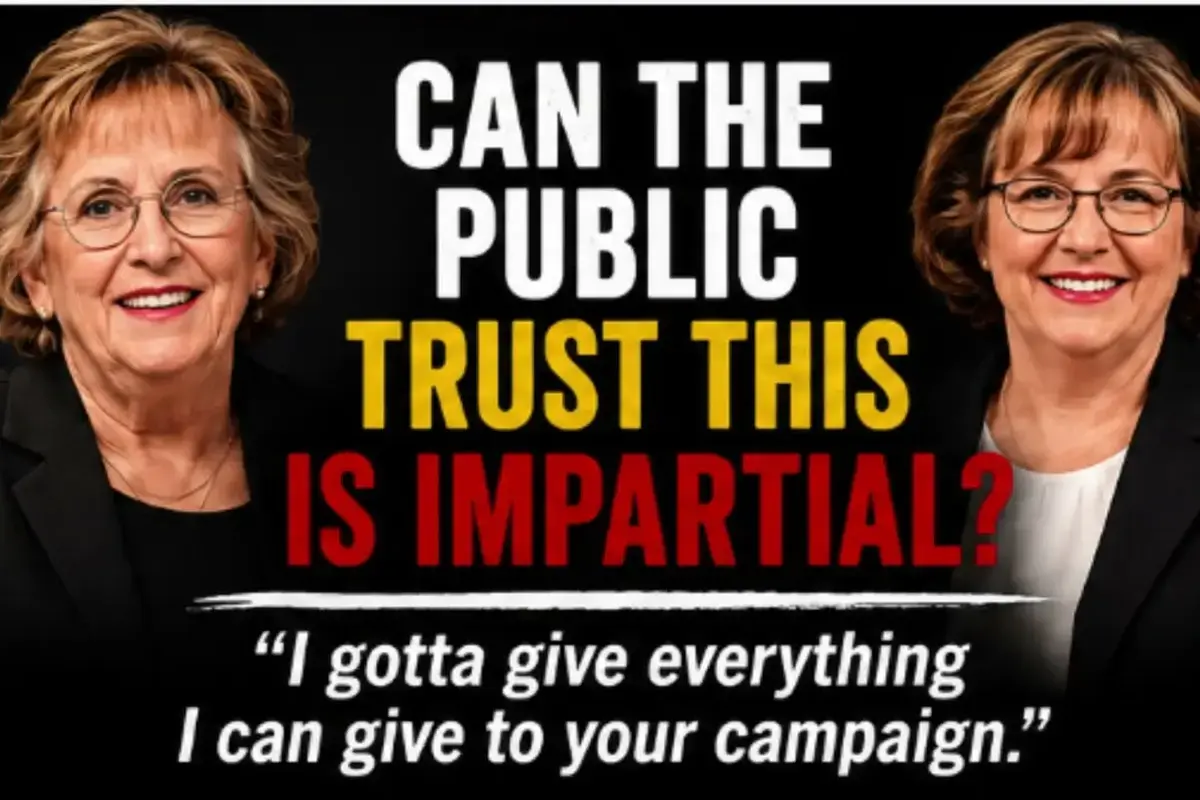
Item 5 was Recorder Justin Heap’s presentation of his early voting plan for the November 3 general election. Chair Brophy McGee opened by thanking Heap for accepting her invitation and noting that “only the board has a public forum, a requirement to meet in public.” She framed the presentation as transparency — then used her opening remarks to take a shot: “Despite our previous dispute, our respective staff have always worked together on behalf of the voter.”
Heap’s plan is operationally significant. Over 2.5 million active registered voters in Maricopa County. Approximately 1.9 million early ballots mailed October 7. Forty-six early voting sites, with 14 opening October 7 and 32 more twelve days prior. First signature verification shift begins at 2:00 AM on November 4. The county is staffed for 280,000 late early ballots.
Heap also outlined the citizenship verification mess: 118,000 voters grandfathered in from pre-1996 driver’s license renewals. The county used the federal SAVE database to verify 59,500 of them. About 1,000 remain unverified and must show proof of citizenship by 7:00 PM on Election Day or be limited to federal-only voting.
The Tension: Heap raised what he called a “legitimate operational concern” — the equipment transition from his early voting sites to the board’s Election Day sites. In Maricopa County, unlike smaller counties, early voting happens at locations that become Election Day vote centers. That means equipment swap overnight. Heap said he offered to let the board keep using his equipment to avoid “all night trucks going back and forth, pulling equipment out and putting new equipment in.” The board, he said, declined.
Lesko didn’t wait to respond. She confronted Heap directly: “I have heard from people that you are continuing to go to Republican meetings and telling people… I don’t know about that Election Day, which is under the Board of Supervisors. You have concerns about that. And it’s this whole blame game thing which really frustrates me.”
Heap defended himself: “This is not intended as a criticism. It is the case, however, that our request was that we share the existing county equipment. This was a demand, I think, made by your team to say, hey, we’re going to have separate equipment.” He added that the board’s plan “puts a burden on your side of the equation. Not on my side. We can get our equipment out.”
The subtext: Heap was laying groundwork. If Election Day sites aren’t ready on time, he wanted it on record that he warned them.
Stewart’s Attempt: Supervisor Stewart tried to have elections staff answer questions about the transition. Chair Brophy McGee ruled him out of order: “Mr. Stewart, no, and allow me to explain… the settlement that we mediated specified how this would go forward. You signed the settlement. We signed the settlement.” She told him to “steer those concerns to your ongoing staff meetings.”
Stewart’s question was never answered. The public never heard from elections staff.
Gallardo on SAVE: Supervisor Gallardo raised a separate but related issue. Heap’s office had referred 60 names to the County Attorney as potentially non-citizens. The County Attorney’s investigation found 52 were citizens, 7 were MVD registration errors, and 1 had checked “not a citizen” on a paper form in 2012 but got registered anyway. Gallardo asked whether the office was still using the SAVE database given that it “failed” to accurately identify citizenship. Heap defended the database, noting it correctly verified 59,500 citizens, and blamed the MVD system for the misidentifications.
What it means: The presentation was supposed to build confidence. Instead it showcased an unresolved operational risk (equipment transition), an ongoing data reliability problem (SAVE/MVD), and a board-recorder relationship where public collaboration masks private acrimony. The fact that Stewart couldn’t even get elections staff to the podium tells you who controls the microphone.
Item 6: Domestic Violence Proclamation — When the Personal Becomes Political
What should have been a routine proclamation became the meeting’s most human moment.
Vice Chair Lesko moved to approve the Domestic Violence Awareness Month proclamation. Then she explained her vote: “I was a victim. I’m a survivor of domestic violence, so I know a little bit about this. And I was one of these women that are like, what is wrong with these women? Why would they stay with a guy that abuses them? And I thought, how stupid is that? Until it happened to me.”
She described her ex-husband controlling her, separating her from family, preventing her from working, threatening to kill her.
Chair Brophy McGee followed with her own story about Eddie Farnsworth, a Republican legislator she “butted heads with on a lot of things,” who created AZPOINT — a website where domestic violence victims can plan their exits without leaving browser history. “I cried and I went back and I hugged Eddie Farnsworth and I said, you did good guy.”
Supervisor Galvin noted that “things like these proclamations are in fact more important than us just taking a vote on random items that we do every single time here.”
What it means: The vote was 5-0 unanimous, as always. But for once, the vote explanations mattered more than the vote itself. This was rare candor from a board that usually treats public comment as something to endure rather than engage with.
Items 7, 9-10, 102, 113: Statutory Hearings and Rate-Setting
These items follow a pattern: the board is legally required to hold a hearing or set a date, the public can speak, and then the board votes unanimously to set the hearing or approve the item.
Item 7 (Hopi Vista Irrigation Water District): Statutory hearing set. No public speakers. Passed 5-0.
Items 9-10 (Patent Easement Abandonments): Two easement abandonments. No public speakers. Passed 5-0.
Item 102 (Peoria County Island Fire District): Pulled from the consent agenda by Lesko. This sets an October 21 hearing on creating a fire district for 1,378 County Island properties in the Peoria planning area. The proposed tax: $260 per $100,000 of limited property value — roughly $1,300/year on a $500,000 home. Lesko noted she had met with Peoria officials in November 2025 and told them to ensure community engagement. She hadn’t heard from Peoria since. Passed 5-0.
Item 113 (Casitas Bonitas Sewer Rate Increase): Sets an October 21 hearing on a proposed sewer rate increase. Two public speakers. Deanna Solor thanked the board for the domestic violence proclamation. Jamie Martin asked how many properties would be affected, what notice residents would receive, and whether those who can’t attend physically would have another way to participate. The Clerk confirmed October 21 is when public comment happens. Passed 5-0.
What it means: These are textbook procedural items. The board isn’t making final decisions — they’re setting hearings. But notice the asymmetry: Peoria officials haven’t engaged Lesko in 10 months, yet the tax district moves forward. Casitas Bonitas residents may not know about the hearing until it’s too late. The statutory framework gives the board cover: “We set a hearing, what more do you want?”
Items 11-101, 103-105: The Consent Agenda Rubber Stamp
Ninety-five items approved in one motion. No discussion. No questions. No debate.
What it means: The consent agenda is where the actual county business happens — contracts, grants, personnel actions, routine approvals. The public can’t speak on these items unless a supervisor pulls one for discussion. Lesko pulled Item 102. No other supervisor pulled anything. That means 95 items affecting millions in county spending passed with zero public scrutiny.
Items 106-112: The Board Addendum — Where Citizens Actually Get to Speak
Eight items. Eight opportunities for public comment. That’s what citizens got out of a 116-item agenda.
Item 106 (RICO Funds — $166,500): Jamie Martin questioned why the expenditure document showed only broad categories: $50,000 investigation, $50,000 capital, $60,000 operating, $6,500 other. “What exactly are taxpayers approving?” she asked. The County Manager noted the item was reviewed in executive session. Mr. Liddy (Civil Division Chief) said specifics were available from the Criminal Division. The board approved it anyway.
Item 108 (Conflict Waiver — Taft Law Firm): Tom Arnold and Leslie Sheppard questioned why no supporting documents were attached. Mr. Liddy explained the waiver process. The Clerk confirmed no documents were attached because they were heard in executive session. The board approved it anyway.
Item 110 (White v. Boggs Settlement — $45,000): Roger Mape and Joe Hoff questioned why taxpayers were paying $45,000 in plaintiff attorney fees. The County Manager confirmed Superintendent Boggs did not prevail. The item was reviewed in executive session. “There is a fair amount that cannot be disclosed.” The board approved it anyway.
Item 111 (Medical Images): Lori Barone and Joe Hoff questioned privacy protections for autopsy images of minors being used in a professional conference presentation. Assistant County Manager Marcie Flanagan addressed concerns, noting the images were of hearts (not identifiable faces), consent was obtained, and slides would not be distributed. The item was also heard in executive session due to a “new statute.” The board approved it anyway.
Item 112 (Bike Lanes): Noah James Markham spoke about e-bike safety in East Valley. No board response. Approved with the rest.
What it means: Four of these eight items had been reviewed in executive session, meaning the public couldn’t see the documents before the vote and couldn’t get answers during it. Joe Hoff calculated that only 10% of the agenda was open to public comment. He’s right — and even that 10% produced more questions than answers.
Items 114-116: Flood Control District Business
Item 114: Five-Year Floodplain Management Plan. Three citizens spoke: Dina Solwer, Danielle Prigg, and Leah McCarty questioned plan changes, notification process, and benchmarks.
Item 115: Property transfer to Flood Control District for $1 consideration. Roger Mape and Leah McCarty questioned long-term maintenance obligations.
Item 116: June 10 Flood Control District Minutes. Tom Arnold, Leslie Sheppard, and Lori Barone criticized the minutes for inadequate documentation of a $68 million contract authorization. The minutes said only that “management addressed questions.” Brooke Wooster, the Open Meeting Law attorney, defended the minutes: “Arizona open meeting law has specific requirements for what is included in the minutes. That’s a date and time, the legal action, who made the motion, who seconded the motion. Additional information is always available on the hyperlinked videos.”
What it means: Wooster is technically correct — the minutes meet the legal minimum. But citizens aren’t wrong to want more. When a $68 million contract gets reduced to “management addressed questions,” that’s not transparency. That’s compliance theater. Chair Brophy McGee thanked staff for their outreach but did not address the substantive criticism.
Public Comment: 29 Speakers, Zero Board Response
Twenty-nine citizens signed up to speak. The board heard them all. No supervisor asked a follow-up question. No supervisor addressed a concern. Chair Brophy McGee noted the board would “take comments under advisement.”
The speakers fell into three broad groups:
Election Integrity and Voter Protection (the majority): Caitlin Contreras (ACLU) demanded transparency from Heap and opposed armed law enforcement at polling places, citing 18 USC §592. Juan Mendez (Lucha) accused Heap of “voter intimidation” and said “the language Heap used to describe the situation was not election security based. That’s literally how voter intimidation works.” David Escobar, a 16-year-old student, demanded 8 additional ballot drop boxes. Multiple Lucha members called on Stewart to publicly commit to voter protection.
Election Security Skeptics: Roger Mape distributed election system notices to all five supervisors and demanded equipment compliance records. Leslie Sheppard referenced Democratic figures’ past statements on voting machine vulnerabilities. Leah McCarty demanded a “national emergency declaration” before the election.
Process and Accountability: Jamie Martin proposed a 12-month compliance review pilot. Joe Hoff criticized the consent agenda for limiting public participation. Tom Arnold questioned why items 84 and 99 — which citizens had requested be pulled for discussion — remained on the consent agenda.
What it means: The board heard from both sides of the election anxiety spectrum — those worried about suppression and those worried about fraud — and responded to neither. That’s not neutrality. That’s abdication. When 29 citizens take time off work to speak and the board’s response is “we’ll take it under advisement,” the message is clear: your input is noted, not valued.
Pattern Analysis: What This Meeting Revealed
1. Lesko’s Motion Monopoly Continues
Debbie Lesko made every single recorded motion. Every one. This is now a sustained pattern across multiple meetings. It means Lesko controls what gets proposed, when it gets proposed, and how it gets framed. Other supervisors can second, but they can’t initiate. That’s not power-sharing.
2. Executive Session as an Opaque Shield
Four addendum items (106, 108, 110, 111) were reviewed in executive session. Citizens asking questions were told the details were confidential. The board approved all four unanimously. When the public can’t see the documents and can’t get answers, oversight becomes a fiction.
3. The 10% Rule
Joe Hoff’s calculation holds: roughly 10% of the agenda was open to public comment. The other 90% — including $166,500 in RICO expenditures, a $45,000 settlement, and a conflict waiver for outside counsel — passed without citizen input. The consent agenda isn’t a convenience. It’s a blackout curtain.
4. Heap vs. the Board: The Settlement That Didn’t Settle
The equipment dispute is a symptom of a deeper problem. Heap and the board have a mediated settlement agreement. They’re supposed to be collaborating. Instead, Heap is raising concerns publicly while Lesko accuses him of privately badmouthing the board. Stewart tries to get answers and gets shut down. This isn’t working together. This is managing a divorce in public.
5. SAVE Database: A Tool Under Pressure
The 60-referred/8-confirmed-non-citizen episode highlights a vulnerability. The SAVE database is the federal government’s citizenship verification system. It flagged 60 people as potential non-citizens; 52 were citizens. The MVD system compounded the error. Heap says they cross-check multiple databases. But the episode feeds narratives on both sides — either the system is catching fraud or it’s disenfranchising citizens. Both can’t be fully true, but neither is fully false.
Financial Summary
| Item | Amount | Description |
|---|---|---|
| 106 | $166,500 | State RICO expenditures (County Attorney) |
| 110 | $45,000 | Settlement in White v. Boggs (plaintiff attorney fees) |
| 102 | $260/$100K | Proposed Peoria Fire District tax rate |
| 102 | $1,300/yr | Example tax on $500K property |
| 113 | $74.71 | Proposed Casitas Bonitas sewer rate per lot |
| 116 (ref) | $68M | Construction service contracts (June 10 FCD action) |
| 115 | $1 | Consideration for property transfer to Flood Control District |
Vote Summary
| Item | Description | Motion By | Second | Vote |
|---|---|---|---|---|
| 6 | Domestic Violence Proclamation | Lesko | Galvin | 5-0 |
| 7 | Hopi Vista Irrigation District | Lesko | Unidentified | 5-0 |
| 9-10 | Patent Easement Abandonments | Lesko | Unidentified | 5-0 |
| 11-101, 103-105 | Consent Agenda | Lesko | Unidentified | 5-0 |
| 102 | Peoria Fire District (hearing set) | Lesko | Unidentified | 5-0 |
| 106-112 | Board Addendum | Lesko | Unidentified | 5-0 |
| 113 | Casitas Bonitas (hearing set) | Lesko | Unidentified | 5-0 |
| 114-116 | Flood Control District | Lesko | Unidentified | 5-0 |
Pattern: Lesko made all motions. All votes unanimous. No dissent on any item.