
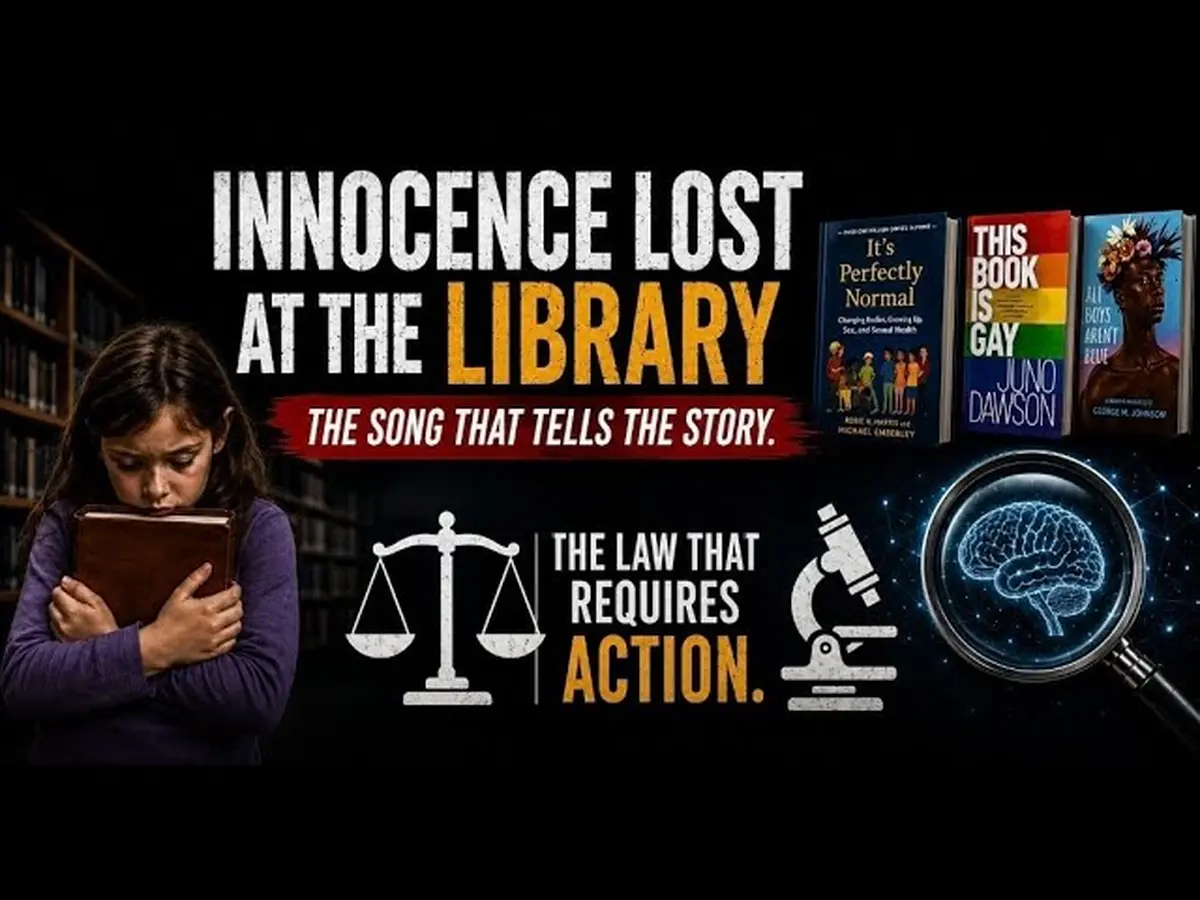
The truth. The science. The law. It’s time to act.
Our earlier investigation, Maricopa County Library Reconnaissance, documented three books—It’s Perfectly Normal, This Book Is Gay, and All Boys Aren’t Blue—available through the Maricopa County Library District. Those materials contain graphic sexual content and remain accessible to minors through open shelves, teen classifications, and digital platforms. A restriction at checkout does not stop a young person from encountering the material while browsing.
This follow-up video continues the record through music and documentary footage. The song “Innocence Lost at the Library” recounts a mother’s phone call to library leadership, the reference to Arizona law on crimes against children, and the response from Library Director Jeremy Reer: change could come if the board aligns. One week later he met with county officials behind closed doors. Questions about what was decided were met with confidentiality. Months passed. A pilot parental-choice program emerged that blocks specific titles from checkout—but does not prevent children from viewing books already on the shelves.
Parents who raise the issue have been met with delay, spin, and the claim that First Amendment concerns keep the books in place. Meanwhile, the content remains available.
Listen to “Innocence Lost at the Library”
The Science Speaks
Professionals in family research, medicine, neurology, and addiction treatment have long warned about the effects of early exposure to sexual material. Children’s frontal lobes are not fully developed. Neuroplasticity means graphic images and descriptions can become permanently imprinted. Pleasure pathways shift. Premature sexualization is rising. Experts note that what is seen cannot simply be unseen, and that girls and women disproportionately suffer the physical and emotional consequences of early sexual activity. Adult pornography has been described as a gateway to more extreme material. These are not abstract theories—they are observations grounded in brain science and clinical experience.
The Law and the Chain of Responsibility
Once the books and the science are on the record, the question turns to those entrusted with oversight. Who sets classification and placement policy for the Maricopa County Library District? When were those policies last reviewed in public? Who has authority to require stronger protections? The trail leads to the governing board and ultimately to the Maricopa County Board of Supervisors.
Citizens have the right to expect urgency when the innocence of children is at stake. Solutions are not complicated. Clearer separation of materials, meaningful parental tools that address viewing as well as checkout, and transparent policy review are within the board’s power.
A Call to Stand
Scripture is clear: “But whoever causes one of these little ones who believe in Me to stumble, it would be better for him if a millstone were hung around his neck, and he were thrown into the sea” (Matthew 18:6). Protecting the pure eyes of children is not optional. It is a duty.
We are not too late. The war for safe families and decent communities is winnable. Rise up. Speak up. Hold those in authority accountable. Attend the meetings. Demand answers. Pray for wisdom for our leaders—even the wisdom of Solomon—that they may know what is right and do it.
No more patience for innocence lost at the library. Let’s stand for the children.