Guided by faith and a passion for righteousness, It Is Our Duty exists to uphold biblical principles in the public square. We focus on the Maricopa County Board of Supervisors, its agendas, meetings, and decisions that shape the daily lives of families in our community. One of the most urgent concerns remains the presence of sexually explicit materials accessible to children and minors through public institutions funded by taxpayers.
What happens when citizens stop relying solely on official descriptions and classifications—and investigate for themselves what young people can actually encounter in a Maricopa County library?
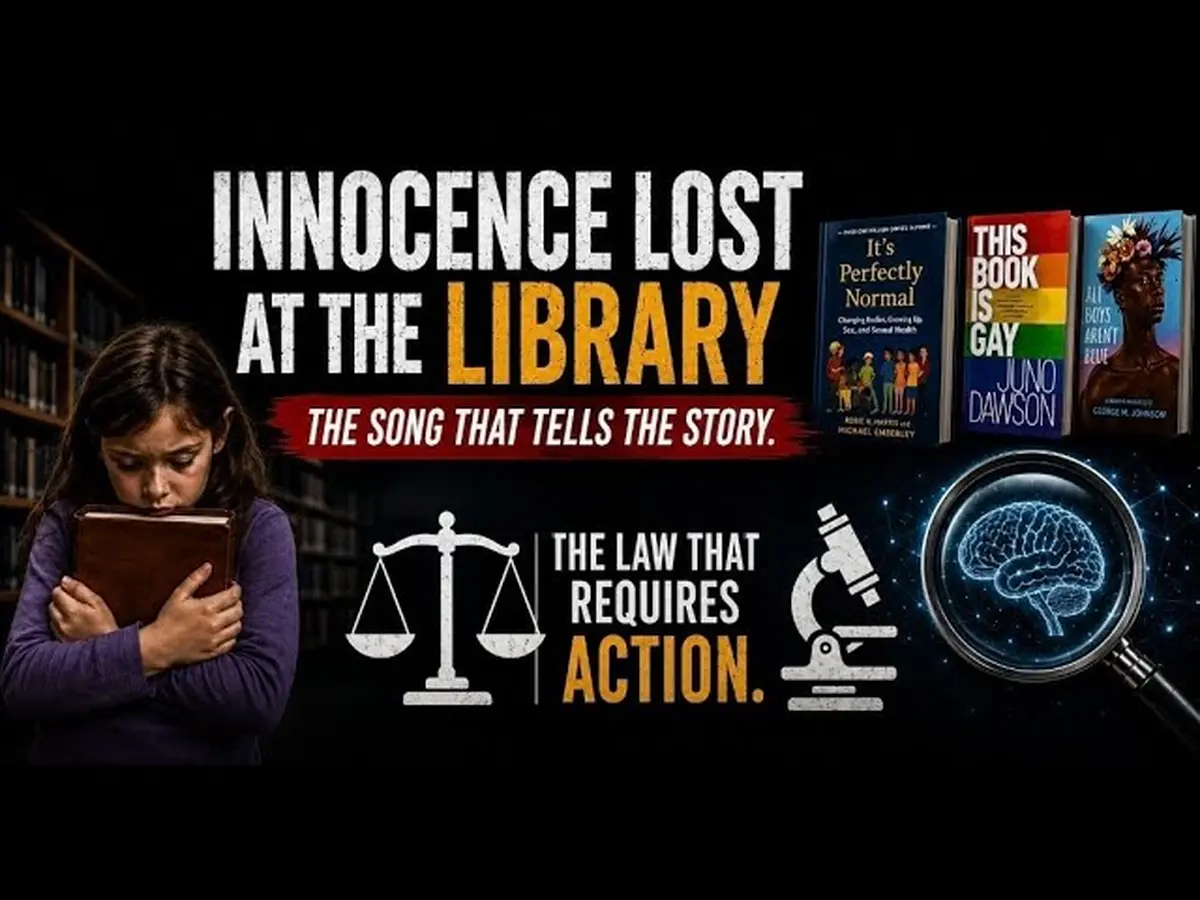
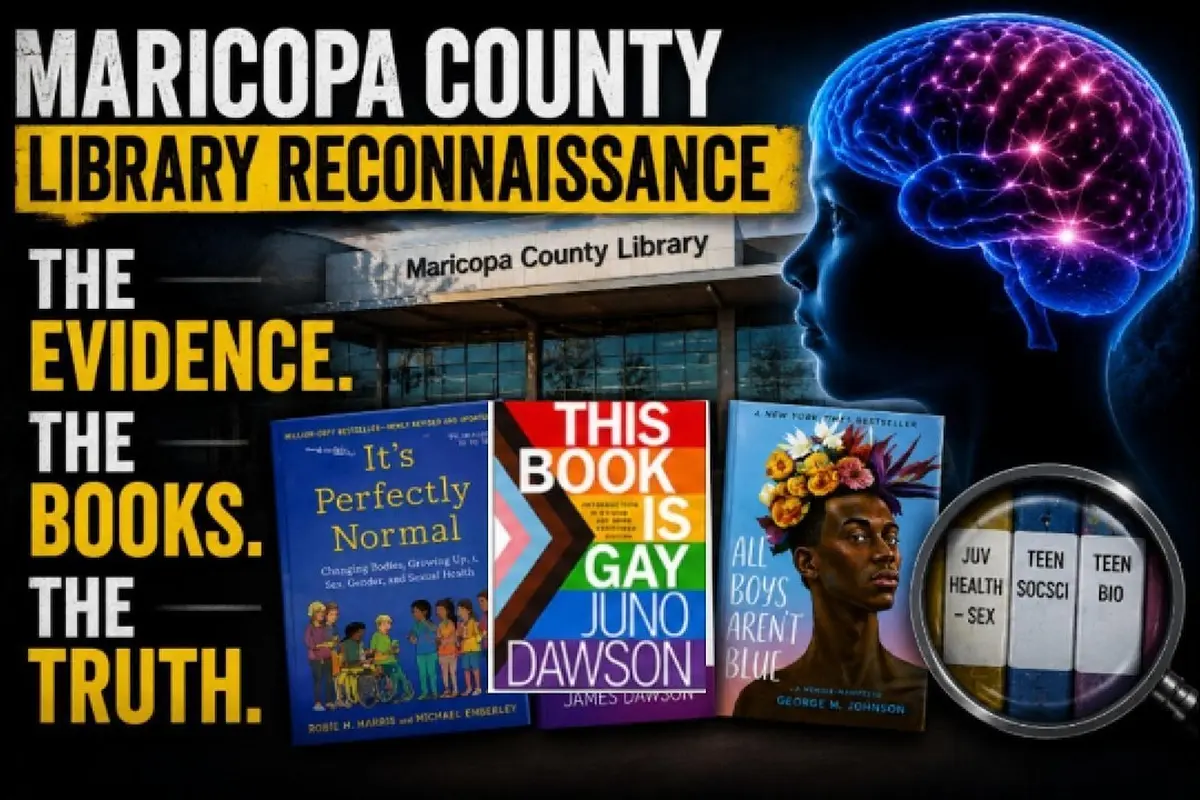
A recent documentary investigation does exactly that. It examines three books available through the Maricopa County Library District: It’s Perfectly Normal, This Book Is Gay, and All Boys Aren’t Blue. The findings place clear evidence on the public record for parents and residents to evaluate.
Watch the Video
The Books Themselves
Investigators obtained copies from county libraries, including the Fountain Hills location, and documented content that goes far beyond general discussions of health or identity.
In This Book Is Gay, sections directed at young readers include explicit instructions on sexual acts between same-sex partners. Passages describe techniques in graphic detail, present practice on oneself as preparation, and discuss positions, lubrication, and sensations in language that leaves little to the imagination. These pages sit in materials classified for minors.
All Boys Aren’t Blue contains narrative accounts of sexual encounters, including detailed descriptions of anal penetration, the use of lubricant and condoms, physical pain turning to pleasure, and related acts. The book has been found in teen biography sections—still within the reach of minors.
It’s Perfectly Normal features graphic illustrations and explanations of sexual intercourse, including heterosexual, woman-on-woman, and man-on-man depictions. Investigators noted these images appear early in the book. Although some copies have been relocated, the work remains labeled as a juvenile health resource and is written for children and adolescents going through puberty.
Library staff confirmed these titles appear under juvenile health, teen social science, teen biography, and similar categories. Even when physical placement shifts toward adult nonfiction or mixed teen-adult shelves, the classification and labeling continue to signal the intended audience as youth.
Access Is Broader Than Checkout
A critical distinction emerges from the investigation: restricting checkout does not necessarily restrict viewing. Exposure can occur before any card is scanned.
Parental “choice” forms exist. Staff explained that parents may list specific titles (by title, author, and ISBN) so a child’s library card cannot check those items out. The form does not allow opting out of entire categories such as teen nonfiction or adult graphic material. Staff also acknowledged that children can still pull books from open shelves and examine them inside the library.
Digital access compounds the issue. Titles appear available through Libby and other downloadable services. Staff indicated they were unaware of robust online age verification that would prevent a minor with a library card from accessing electronic versions.
Staff at multiple branches described a collections development process handled centrally. Individual libraries do not independently order or fully control placement. Regional directors and administrative decisions determine distribution and location. Some materials once in children’s nonfiction were moved after complaints, yet teen-classified books with similar content often remained in teen areas or mixed shelves. One staff member noted that youth sexual health materials were directed to adult sections while teen books stayed accessible.
The Developing Brain and Expert Perspectives
The documentary incorporates commentary from professionals who study the neurological and developmental impact of early sexual exposure. These voices emphasize that children’s brains are not equipped for adult sexual content.
Frontal lobes remain underdeveloped. Neuroplasticity means repeated or intense images and descriptions can form lasting pathways. Dopamine and bonding chemicals such as oxytocin reinforce seeking behavior. What begins as curiosity or accidental exposure often escalates. Experts describe pornography and explicit material as capable of rewriting pleasure set points and shaping a young person’s sexual template prematurely.
Clinicians note that many who later struggle with compulsive behaviors first encountered material innocently. Early sexualization correlates with impaired ability to form healthy emotional and sexual relationships later. Biology also plays a role: girls and women disproportionately bear physical consequences of early and multipartner activity, including infection, infertility risks, and unwanted pregnancy.
One neurosurgeon and others highlight that such images do not simply “flit through” a child’s mind. They can imprint permanently. A former federal prosecutor on child exploitation and obscenity has called adult pornography a gateway toward more extreme material. The cumulative message from these professionals is clear: public institutions that facilitate access share responsibility for downstream harm.
The Chain of Responsibility
Who sets library policy in Maricopa County? Who reviews classifications, labeling standards, and placement decisions? When were those policies last examined in public? Who holds authority to require changes?
The trail leads to the Maricopa County Library District governance structure and ultimately to the Board of Supervisors, which oversees the district. Residents have repeatedly raised these issues during public comment. On one occasion, a question about the timeline for removing inappropriate material from areas accessible to children was met with a recess and the removal of the speaker. Minutes of meetings have been criticized for minimizing or omitting these concerns.
Board members and county management have stated that juvenile sexual health books were moved to adult sections. Investigators found that labeling often still identifies the material as juvenile or teen, that teen-classified titles with graphic content remain in teen areas, and that open-shelf and digital access persist. Officials have been asked for dates of comprehensive policy review. Responses have sometimes deferred to research or cited privilege for executive session discussions.
Public comment has framed the matter in stark terms: the Board funds these collections and therefore bears accountability for what children can encounter. Solutions need not be complicated. Clearer age-based separations, stronger labeling that reflects actual content, meaningful category-level parental controls, and digital safeguards are practical steps.
A Biblical Call to Protect the Vulnerable
Scripture speaks with clarity about the responsibility of adults toward children. Jesus said, “But whoever causes one of these little ones who believe in Me to stumble, it would be better for him if a millstone were hung around his neck, and he were thrown into the sea” (Matthew 18:6). The command is not abstract. It addresses those who place stumbling blocks before the young.
Proverbs repeatedly urges parents and community leaders to guard the path of the next generation: “Train up a child in the way he should go” (Proverbs 22:6). The protection of innocence is not optional; it is a duty rooted in the character of God, who is both holy and protective of the weak.
We are not left without hope. “The Lord is near to all who call upon Him, to all who call upon Him in truth” (Psalm 145:18). Prayer for wisdom among elected officials, for courage among parents, and for the purity of our children’s minds remains essential. The same God who formed the brain understands its design far better than any policy manual.
The Public Record and the Path Forward
This investigation places the evidence, the books, the library responses, and the chain of authority on the public record. Parents and residents can examine the material themselves, visit the shelves, review the catalog, and evaluate whether current policies adequately protect minors.
The question now rests with those who govern: Will the Maricopa County Library District and the Board of Supervisors take further, measurable steps to ensure that materials containing graphic sexual instruction are not readily accessible to children and teens? Will policy reviews occur in open session with transparent documentation? Will labeling, placement, and digital access be aligned with the developmental reality of the young people the libraries serve?
It Is Our Duty will continue to follow the record, attend the meetings, and report the facts. The protection of children is not a peripheral issue. It is a foundational responsibility of any community that claims to value family, faith, and the next generation.
The evidence is available. The books are real. The truth remains for every parent and citizen to confront.